
“Remember Red Bull?”: Authenticity is no longer outside capitalism
Brands in subculture from Magnetic Fields to Elvt.live
“I don’t care about the sponsors and their activations, it's their job …. Mag Fields is disappointing now, but it’s not like it used to be 5–6 years ago before COVID. Remember Red Bull? They always did cool stuff.” — overheard at Magnetic Fields Festival, Rajasthan, 2024
Uttered in the shared quiet of a fireplace as the sun comes up after Tom Midland’s 5am closing set— partly confession, partly complaint, partly flex. What sounds like simple nostalgia — “Remember Red Bull?” — is in fact a cultural paradox: a longing for authenticity expressed through the memory of a corporate sponsor.
Music subcultures canonically have an antagonistic relationship with capitalism. The old thinking is that culture is incompatible with commerce, i.e. everything the business school grads touch turns to shit. But in a country with negligible public support for alternative music culture, brand sponsors have always been a necessary evil. The result is a fragile hypocrisy that continues to be enacted today.
In this cultural war of attrition, the question isn’t whether they’re present, but how they show up — from big-budget ownership fantasies to smaller, direct-to-culture alliances that treat scenes as partners rather than assets.
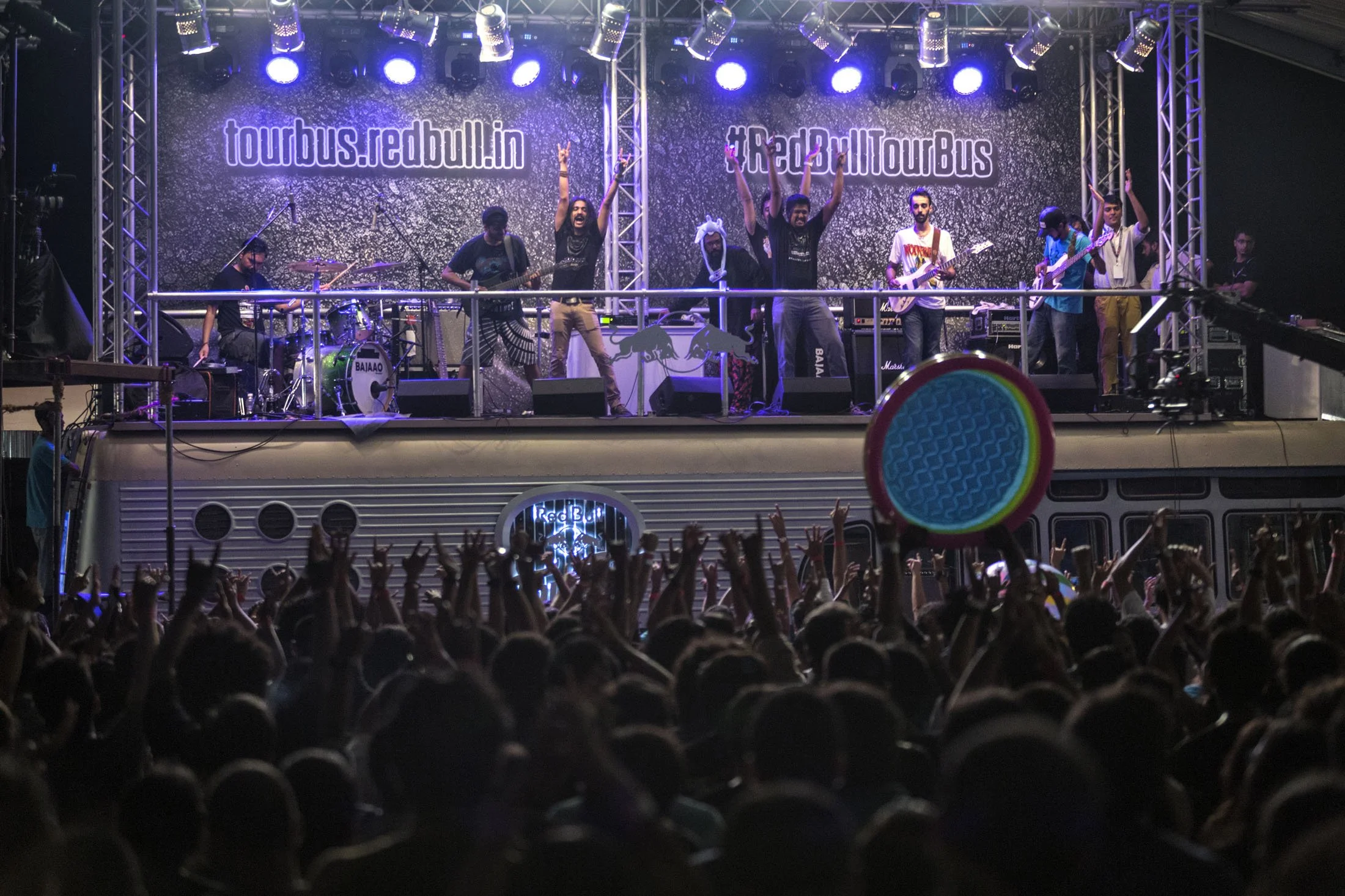
Red Bull Tour Bus arrives in Mumbai, 2013. (Credit: FestivalSherpa)
Authenticity as grammar
Authenticity in music culture has never been a fixed essence — it’s always been relational. It only appears in contrast, when one scene defines itself against another that’s seen as diluted, commercial, or inauthentic.
“The scene is dead”— such statements let people signal their status and position in the subculture. The more you can talk about ‘back then’, the more credible and experienced you appear, the more you can flex your insider status. Nostalgia is a performance of credibility— of cultural capital.
In that sense, authenticity is less a value than a language, a grammar to signal what belongs and what doesn’t, distinguishing insiders from imitators. Like any language, its meanings shift. What looks performative to one generation might feel authentic to the next. Take Boiler Room, for example— in its early days, critics asked a simple question: how can such a hyper-mediated event be true to dance music’s original tenets of freedom through anonymity? The reality is that with time, this problem has been bypassed altogether. For the Boiler Room generation, mediation is not a betrayal of authenticity: it’s part of how authenticity is constructed.
The accusation often levelled at the new scene is that it has forgotten the anti-capitalist and revolutionary power, and responsibility, of alternative music culture. But the opening quote reveals an irony: any memory of an ‘authentic’ 90’s or early 00s countercultural moment in India inevitably implicates global consumer youth culture. The same old-heads who lament the loss of that purity today rely on brands to make their case.
Think of the MTV—Vh1—Channel V era, or Pepsi’s Yeh Dil Maange More moment, or owning Levi’s jeans as rites of passage. What we call ‘authentic’ adolescence was always-already mediated by multinationals. Brands that were once part of that historical moment got absorbed into its mythology, and they are now recalled as shorthand for an era of perceived purity.
Similarly, to recall Red Bull (the Red Bull Tour Bus being one of the most memorable) is not to recall ‘adventure’ or ‘thrill’ as their brand managers may have hoped then, but to invoke a lost feeling of community and discovery. The brand becomes a relic of authenticity itself.
Thus, brand Red Bull becomes part of a lexicon of nostalgia used to flex insider and veteran status. In the opening quote, the festival-goer in one breath claims himself above the dirty and inauthentic business of brands— and yet in the next exonerates Red Bull as a signifier of the better days ‘back then’.
The old binaries no longer hold. ‘Selling out’ is not as black-and-white as the rubber stamp of corporate investment. Maybe brands aren’t the enemy by default? Maybe subcultures are adapting to coexist with commercial involvement?
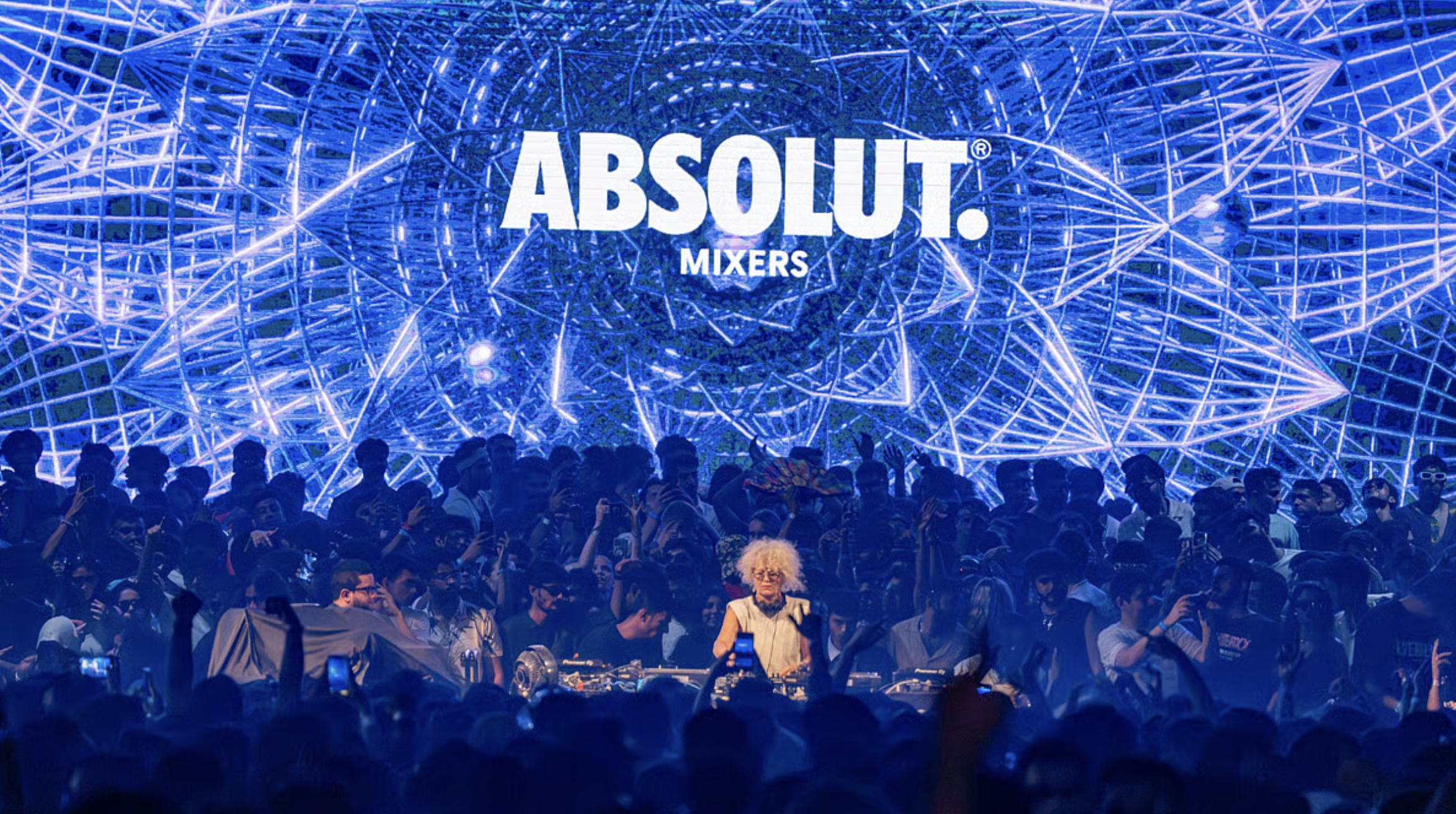
Boiler Room X, a collaboration with Absolut, in Mumbai 2024. (Credits: Homegrown)
Saviour complex
On the other side, brands and businesses have always wanted to get into cool youth culture. Their mandate has always been clear— if brands face resistance to entry, then they can only build trust by supporting behind-the-scenes— through artist funds, sustainable venue and events partnerships. At a global level, Jagermeister’s Save The Night fund was a lifeline for many grassroots operators during the pandemic. Red Bull Music Academy’s nineteen years of events, artist platforms, and gig circuits built the brand’s current mythical status even among fans.
On domestic soil, this more romantic view is parroted at higher levels— BookMyShow in recent conversation with Music Plus points out the collective benefit of growing the industry— that “the biggest return on investment lies in [...] the sense of civic pride, community participation and emergence of local talent [that] all add to a city’s cultural identity.”
But in India, brands focus less on building artist ecosystems (more on that later) and instead on trawling an elusive Total Addressable Market of fans/consumers (in the alcobev industry, the golden goose today is a widely-circulated mythical number— 20 million LDA (Legal Drinking Age) consumers entering the market per annum).
In pursuit of that rainbow, businesses with big budgets have historically footed the bill for some of the most foundational event series, festivals, artist platforms and college gig circuits— Bacardi (NH7 Weekender), Levi's (Levi's Lounge, Mumbai and Levi’s 501 Day events), Harley Davidson (Harley Rock Riders) and Converse (Road to Rubber Tracks).
A more recent history of brand sponsors is laid out by an article by Amit Gurbaxani— well worth the read. Through conversation with Uday Benegal (Indus Creed), Gurbaxani points out a role reversal: even back in early 2018, brands were already conspiring to move beyond backing culture— into owning it.
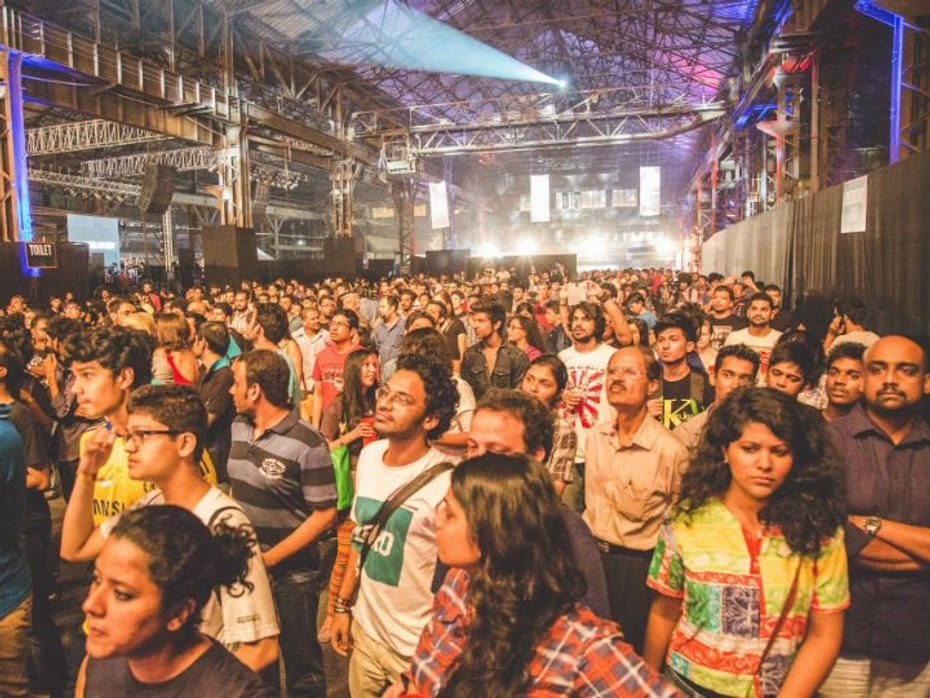
Some familiar faces in the crowd at Harley Rock Riders, Season V (Credits: ZigWheels)
Delusions of ownership
Today, the game is the same, but the stakes are higher. The market for live music events is booming, and the 2024 season was a turning point.
A recent article by Peony Hirwani points out how brands are responding aggressively, and organisers are getting squeezed. Brands want more control and have higher expectations from partnerships, all while the live circuit is more dependent than ever amid rising costs.
Brands are even reconsidering if they need at all to win the trust of artists and promoters to get access to fans. Already, ABinBev is now trying to replace promoters altogether, to own IP’s and curate experiences themselves.
They are also reconsidering the traditional route of supporting the ecosystem first. In India, shifting the spotlight from homegrown artistry to generic fandom is simply good business. Fans still idolise mostly foreign artists.
A case in point: Budweiser’s original Yours To Take campaign in 2022 partnered with hip-hop culture directly through artists like Anderson .Paak, who could genuinely connect with fans through a story of being “young, black, gifted, and dangerous” (lyrics from Anderson .paak’s track with the campaign name).
But when ABInBev brought Budweiser’s Yours To Take campaign to India, they dropped the artistry story entirely. The press release is as on-the-nose corporatespeak as they get:
“This digital film breaks away from the traditional brand storytelling, shifting the spotlight from iconic performers to the raw, unfiltered energy of fans [...] powered by a global anthem that captures the unbridled essence of Indian youth culture.”
Cut out the middleman, i.e. the artists, and go direct to the fans. The result is a cheap imitation of the original campaign, swapping out Anderson .Paak for the “global anthem” that captures the “essence of Indian youth culture”: Bon Jovi’s It’s My Life.
At events like Budx NBA House Mumbai in June 2025, despite massive spends, BudX’s cultural curation felt shallow. The likes of Nyshka Chandran and Provhat Raman visited for a panel on South Asian artistry, only to be drowned out by gaudy basketball activations. I was probably the only one in attendance who was not a paid press or entourage. The same pattern repeats: big budgets, little meaning.
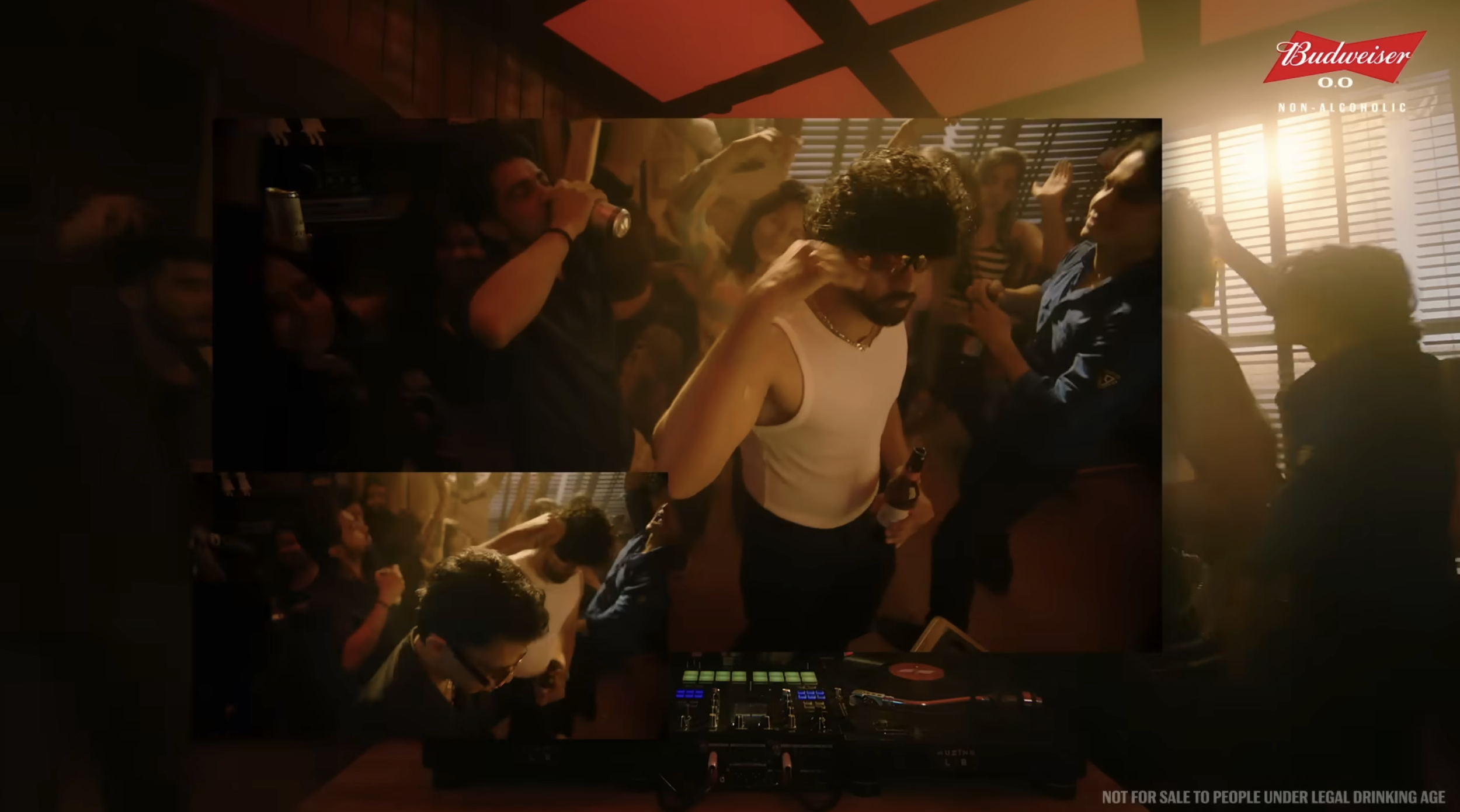
Still from Budweiser India’s The Night Is Yours To Take campaign (credit: Budweiser India)
The point of no returns
Marketers are scrambling to keep pace with the consumer boom— but does the fantasy actually translate to business advantage?
It’s easier for alcobev companies, for whom direct bottle sales through bar rights at events are a major channel for sales (and marketing) due to restrictions on direct advertising.
But the reality is that most businesses are not going to make their money back through sales. Instead, the only hope is in being discovered at that event by fans who they assume overlap with their own ideal audiences.
When it comes to measuring impact on brand relevance, sponsorships are a black box. Businesses rely on poor proxies for genuine engagement— footfall, content impressions, visibility in terms of social reach.
Direct consumer research is also unimaginative. At Budx’s The Loft, Goa, I was surveyed by a team from Budweiser, with whom I had a very blunt conversation—
“Is this venue better than others in India?”
“Yes.”
“What do you usually drink at such events?”
“Usually what’s cheapest— Bacardi and ice?”
“Did attending this event make you want to buy more Budweiser beer?”
“Probably not.”
And money, like boardroom patience, dries up quickly. It took nineteen years for Red Bull Music Academy to earn its reputation around the world. Most brand managers switch jobs every two years.
This game is not for the faint-hearted or short-sighted— sponsorship consultancy Sponco CEO Subramanian Iyer, in recent conversation with Music Plus, points out that: “these are long-term investments. Some parts are measurable but a large part is about building cultural relevance [...] We do not have many brands willing to take that kind of long-term bet yet.”
There are no easy solutions, of course. There is no special-sauce metric that suddenly incentivises brands to ‘build authentic culture’. Long-term commitment also requires frequent, consistent, and varied touchpoints with consumers, not just at one-off major events. Bacardi’s exit after a decade with NH7 Weekender proves that the annual-slap-a-logo-on-the-flyer approach sponsorship model is not really effective.
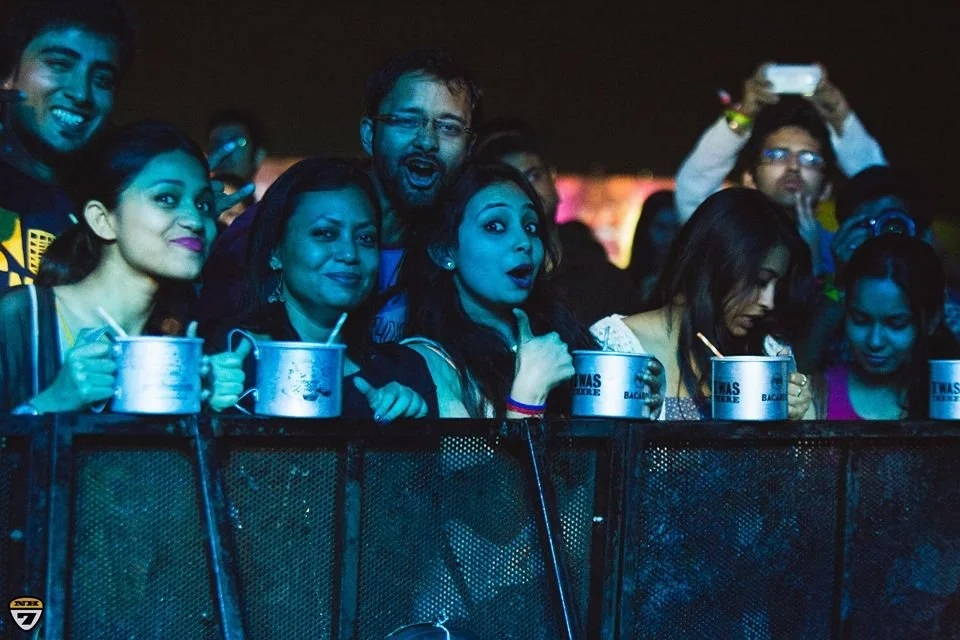
Bacardi’s iconic #iwasthere mugs— now souvenirs of a genuinely lost era. (credit: NH7 Weekender Facebook)
Direct To Culture
To recap— big businesses are getting nowhere closer to building meaningful relationships with fans, especially if they bypass the grassroots scenes where such relationships are incubated. But simultaneously, brands are no longer the subcultural enemy, and authenticity is no longer defined by rebellion. In this strange scenario, maybe the question is not whether brands belong — but which ones should.
Direct-to-consumer brands have already broken distribution monopolies. The next frontier is cultural. Instead of chasing ‘youth’ in the abstract sense as big businesses have so far, smaller brands have a chance to pick a scene, a genre, a niche community, and genuinely show up there again and again until they become part of its folklore.
This is mostly theoretical, however. It is difficult to foresee many small brands committing years of partnerships, especially when small businesses face existential crises every year. But some brands do offer experiments with these kind of partnerships. Seeking examples, we spoke to Khyati and Shalina of Studio Kitsch Mish, a creative consultancy in Mumbai.
Some braver brands are fully committed to music culture. Lo-alc beverage brand Pursue is going both routes— fan-first and artist-led— recently through owning the Cosmic Disco Bar at Magnetic Fields and an artist residency in Alibaug.
Other brands, especially those a bit more distant from music, tend to be light-touch but more literal— Bombay Sweet Shop just gave away 100 tickets for Rolling Loud festival.
But more distant brands can still make forays into live events, if they can be more imaginative with surrogate advertising. Wellness and sports supplement brand Fast&Up did a pop-up at India Cocktail Week, moving to earn a niche in the alcohol/nightlife space. D’you, a skincare brand, did the water packaging at the recent Kevin Hart show in Mumbai— on the inventive premise that skincare is hydration for the skin.
Shalina and Khyati do caution, however, against blind faith in the hype: not every brand should be in music. Instead, visibility through value alignment is crucial — for example, Namiyaa, a sustainable personal care brand, was at Echoes of Earth festival, where sustainability and wellness are front and centre. Brands must accept that immediate sales aren’t the point; it’s being seen at the right event alongside the right fellow brands.
That is a bitter pill to swallow— especially for small businesses with tighter budgets. It’s tempting to imagine them as the ‘good guys’: nimble, but in reality, multinationals are the ones who can afford the long game. And yet, if small brands do play it, they might do it with more creativity and incisiveness.
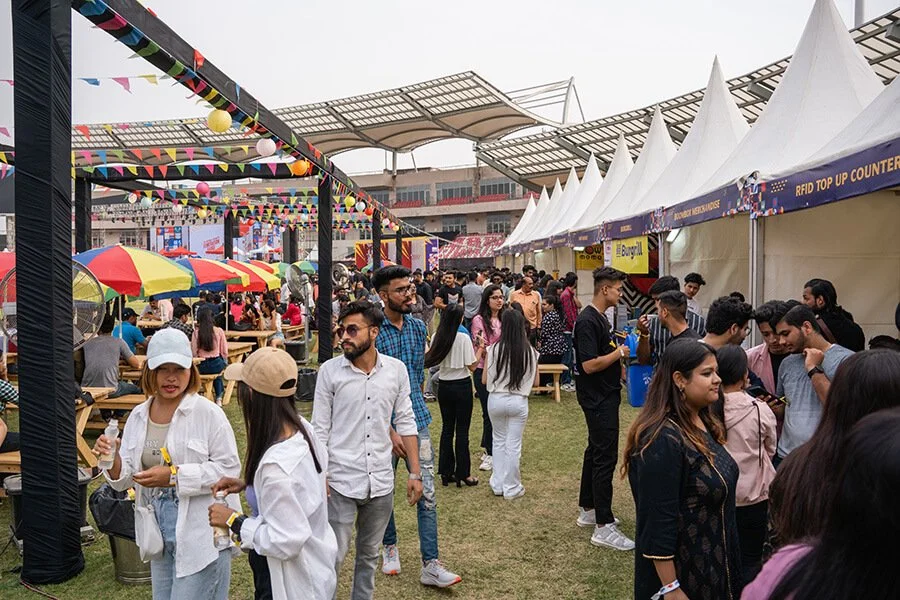
Royal Stag Boombox Music Festival Pune, 2024. (Credits: Seagram’s Royal Stag Fan)
What grassroots partnerships offer audiences
Elvt.live is a DIY collective expanding out of Mumbai. In a city where the only venues are monopolised, Elvt.live has broken through by taking over less plug-and-play spaces. They have to sort out everything from liquor licenses to A/V installations— and they rely on a community of like-minded young people to put it all together. As Nathan Menezes of Elvt.live tells me, these are passionate 23-27 year-olds with a point to prove — they “usually don’t get respect or acknowledgement from older people in the scene, who will call them oversmart.”
Elvt.live has built partnerships with brands willing (or constrained) to go grassroots first. Their Monsoon Gathering in August 2025 was a microfestival with pop-ups from small businesses (CBD wellness products, homemade brownies, lo-alc craft beer, etc.), a yoga class, a panel discussions on wellness, b2b duo Anshul & Malav, and of course, Sunju Hargun. This format gives attendees a full-day, cross-interest, multi-sensory cultural experience. At their Halloween event, Elvt.live brought on bigger partners in Simba beer and fashion brand Chapter 2.
Nathan points out that relationships with these brands are symbiotic. Big sponsors are unlikely to come to a grassroots, experimental concept. And if they do, they usually have a long list of expectations (although he reassures me that Simba is an accommodating partner). Micro-brands, by contrast, are often aligned with the tone of the event itself and can offer something useful, tactile or experiential for attendees, besides nominal rent for space, and freebies for artists, speakers and crew.
At best, this model shows that a subculture can create value for brands and fans simultaneously. At worst, it's a fragile balance, and one that will be tested when scaled.
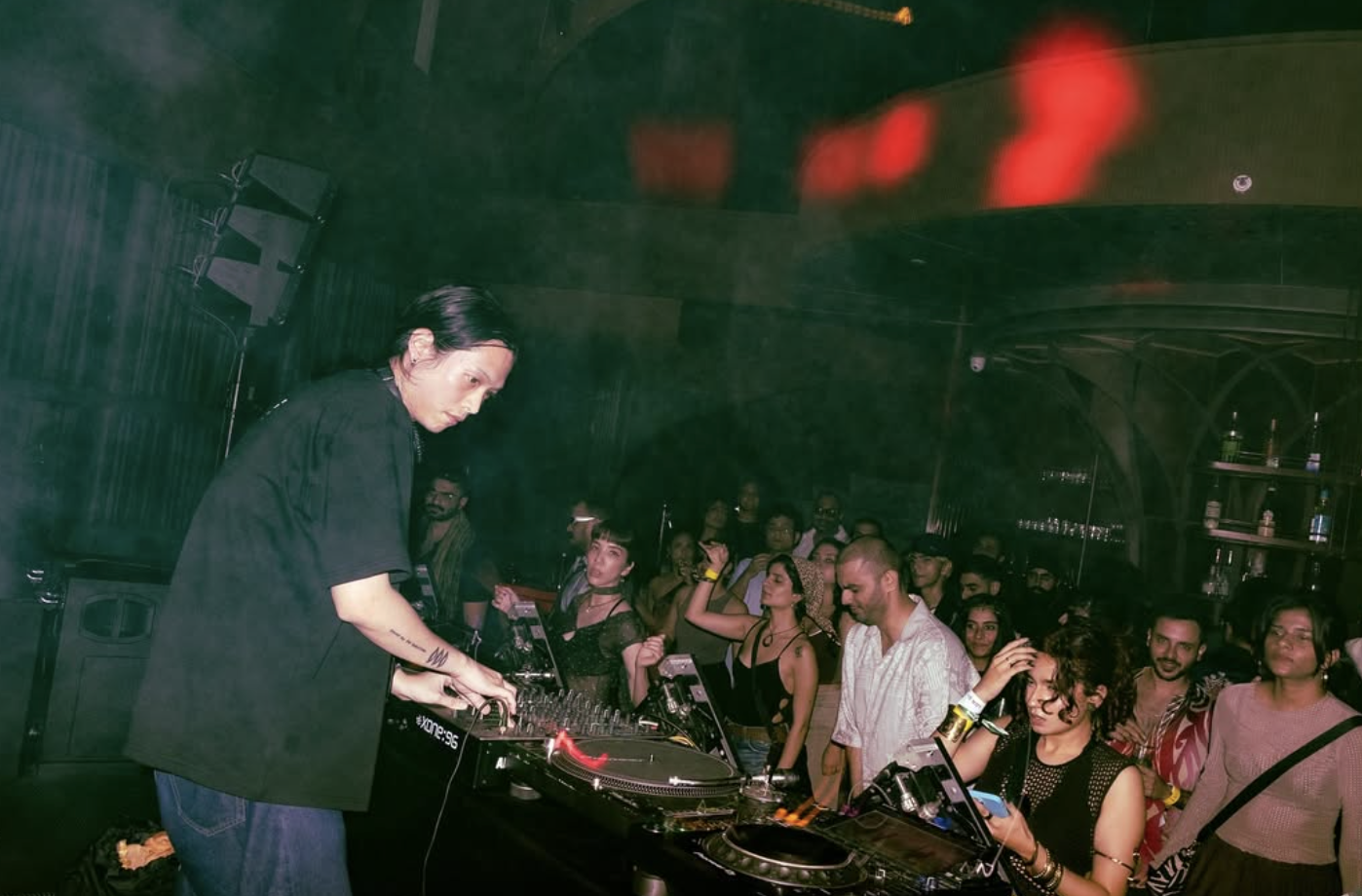
Dott playing at Elvt.live’s October Gathering. (Credits: Rahul Takshak for Elvt.live)
Authenticity after Apocalypse
We mourn ‘authentic’ eras by invoking a multinational energy drink. But what we miss isn’t a brand-free paradise. We miss a time when at least some brands took risks with us, stuck around, and felt woven in instead of parachuted in for a season.
In a landscape where everything circulates on monetised platforms, there is no clean outside to capitalism to retreat to. Brands are in the room whether we like it or not. The work now is to decide what kind of role they’re allowed to play.
In the end, authenticity won’t be decided by whether a logo is present in the room, but by who the room is organised around. What keeps a scene alive isn’t who funds it, but who it’s for.